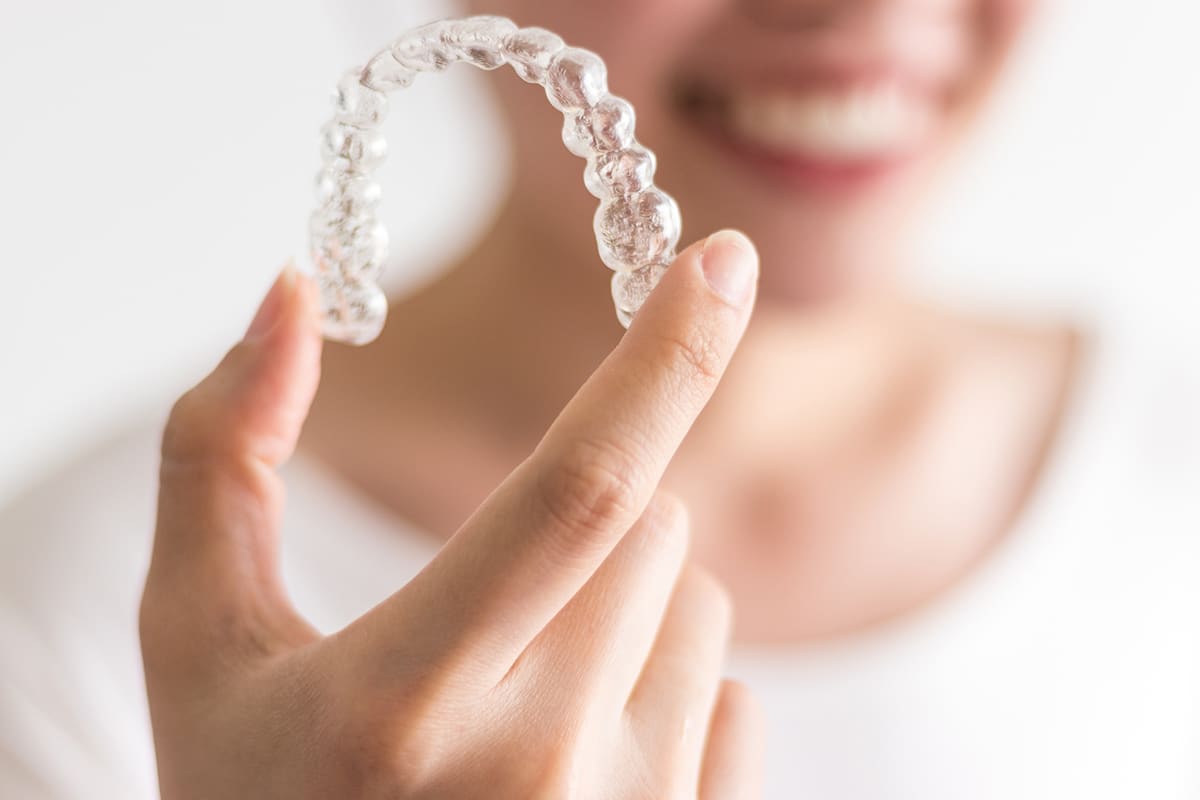
Straightening teeth benefits more than your appearance. How your teeth line up affects your bite, oral hygiene, and daily comfort. When patients ask us about clear aligners, they often want to know whether Invisalign® can address their specific dental issues.
Invisalign can address many orthodontic cases, but everyone’s needs are different. Clear aligners work well for some issues, while braces or another treatment may suit other issues better. In this article, we explain what Invisalign often fixes, its limitations, and why you need a complete orthodontic evaluation before starting treatment.
What Dental Issues Invisalign Can Often Fix
Invisalign works well for many mild-to-moderate orthodontic cases. Clear aligners use controlled pressure to move teeth over time just like fixed braces. Most patients who want their braces to be less noticeable consider clear aligners an excellent choice, and they know consistent aligner wear is the key to a good outcome.
Mild to Moderate Crowding
Your teeth may overlap, twist, or sit out of line if you do not have enough room in your mouth. Invisalign often improves mild to moderate crowding by creating space and gradually moving teeth into alignment. Sometimes, we perform minor enamel reshaping between teeth to create additional space.
Do not assume clear aligners can fix every crowded smile. When severe crowding exists that requires major tooth movement, extractions, or complex bite correction, other options may be more effective. The degree of crowding determines if Invisalign will succeed.
Small to Moderate Gaps
Invisalign also helps close spaces between teeth. Tooth size differences, missing teeth, or shifting can create gaps. Aligners efficiently move teeth closer together when spacing is mild to moderate.
If you have small gaps between your front teeth and a healthy bite, you might benefit from aligners. Every treatment plan should focus on both appearance and function, not just closing visible spaces.
Some Cases of Relapse After Braces
If your teeth move after orthodontic treatment—often because you stopped wearing your retainers—Invisalign can help correct the relapse. Aligners easily bring slightly shifted teeth back into line.
We find this use of aligners straightforward since the required movement is usually small. However, we still need to examine you because shifting may cause changes in your bite that require attention.
Which Bite Problems Invisalign May Improve
Invisalign doesn’t just improve appearance. Clear aligners can correct some bite problems, depending on their severity and how your teeth and jaws fit together. Planning matters even more with bites because fixing a bite often involves greater complexity than front-teeth alignment.
Mild to Moderate Overbite
When upper front teeth overlap the lower ones more than they should, you have an overbite. Invisalign can improve mild to moderate overbites by moving the teeth and guiding the bite into a better relationship. We may use attachments, elastics, and careful tooth movement planning to achieve this.
However, not all overbites respond the same way. If the issue comes from the jaw rather than just tooth position, aligners alone may not solve it.
Some Underbite and Crossbite Cases
When lower teeth sit ahead of upper ones, you have an underbite. A crossbite occurs when the upper teeth bite inside the lower teeth. Invisalign sometimes corrects mild forms of both, especially if tooth position—not jaw discrepancy—causes the problem.
For example, if only one or two upper teeth sit behind the lower teeth, aligners may move those teeth into a healthier position. When the entire bite suffers from skeletal jaw structure problems, we usually need more advanced solutions.
Open Bite in Select Cases
When your upper and lower teeth don’t touch upon closing your mouth, that’s an open bite. In some dental-led cases, Invisalign improves open bites by promoting the right movement patterns, thanks to how aligners cover the teeth.
Complex open bites caused by jaw growth, tongue posture, or other habits may require more comprehensive treatment than aligners alone.
When Invisalign May Not Be the Best Option
Understand this: while Invisalign helps many, it does not replace all other orthodontic options. Some situations require the precision and force that only braces or specialized treatment can deliver.
Severe Tooth Rotation or Large Movements
Aligners struggle with heavily rotated teeth or teeth needing significant repositioning. While Invisalign technology improves each year, some tooth movements remain unpredictable—especially when roots need major shifts or teeth must travel long distances.
For these challenging cases, braces often give us better control. Sometimes we recommend a hybrid plan—using aligners for one phase and braces for another.
Significant Jaw or Skeletal Problems
Aligners move teeth, but they cannot alter jaw size and position as growth modification or jaw surgery can. When a bite problem results primarily from jaw structure, Invisalign won’t solve it alone.
Patients with pronounced underbites, severe overbites, or major asymmetry usually need a customized plan. Your age, diagnosis, and whether the issue is dental or skeletal determine the best approach.
Lack of Consistent Wear
Invisalign works only if you wear your aligners as instructed—ideally 21 to 22 hours each day. Poor compliance disrupts results. If you remove the aligners too often or skip scheduled changes, your teeth won’t move as planned.
For kids, teens, or anyone hesitant about consistent wear, braces may provide a better outcome since they remain fixed in place.
Restorative or Gum Health Issues
You need healthy gums and teeth before starting orthodontic treatment. Untreated gum disease, cavities, or other dental issues must come first. Without a solid, healthy foundation, tooth movement becomes unreliable and potentially unsafe.
For example, significant bone loss from periodontal disease means we need to approach orthodontics carefully. Often, braces or aligners play just one role within a larger oral health strategy.
What Decides Whether Invisalign Will Work for You
A thorough orthodontic evaluation determines if Invisalign can help you. We don’t base the decision solely on what your front teeth look like. We consider bite function, tooth position, jaw relationships, gum health, and the specific tooth movements needed.
A Full Exam Matters More Than Photos Alone
Smile photos and online assessments can provide a starting point, but they never substitute for X-rays, scans, or a real clinical exam. Smiles that look similar from the outside may actually require entirely different plans. The details beneath the surface and how your top and bottom teeth come together truly matter.
Treatment Goals Must Be Realistic
Some patients seek minor cosmetic improvement. Others need complete bite correction. We help you set achievable goals, clarify which results Invisalign can deliver, and recommend alternatives if another solution promises greater long-term success.
Retention Matters for Lasting Results
Retainers keep your teeth from drifting after treatment, whether we use Invisalign or braces. For stable, long-term results, we always stress the importance of wearing retainers as part of your final phase of care.
Choosing the Right Next Step
If you have mild to moderate crowding, spacing, or certain bite issues, Invisalign often provides an effective and discreet solution. For relapse after braces or anyone wanting low-visibility treatment, aligners might fit your needs. Still, cases involving major tooth movement, significant jaw differences, or complex alignment will likely require braces or another approach. Schedule a professional evaluation so we can assess your full bite—not just the look of your front teeth.
Frequently Asked Questions About Invisalign
Can Invisalign fix crooked teeth?
Yes, Invisalign often straightens mildly to moderately crooked teeth. The right approach depends on how much movement you need and if your bite needs correction, too.
Can Invisalign fix an overbite?
Invisalign frequently improves mild-to-moderate overbites. For severe overbites—especially those caused by jaw alignment—we typically recommend a different treatment.
Can Invisalign close gaps between teeth?
Yes, Invisalign usually closes small or moderate gaps. We also consider the cause behind the gaps and check for any other dental health concerns that need attention.
Is Invisalign only for cosmetic problems?
No, Invisalign corrects both cosmetic concerns and some bite and function issues. However, aligners cannot fix every bite problem, so we will let you know if another approach serves you better.
What if my case is too complex for Invisalign?
If Invisalign isn’t right for your case, we suggest braces or alternative orthodontic options. Occasionally, we blend approaches to ensure the best results.
At Andover Orthodontics, we guide patients and families in choosing the best orthodontic options for their needs. We serve our community with treatments that improve smiles and bites for long-term health and confidence. If you would like to learn more about your options, contact our office.